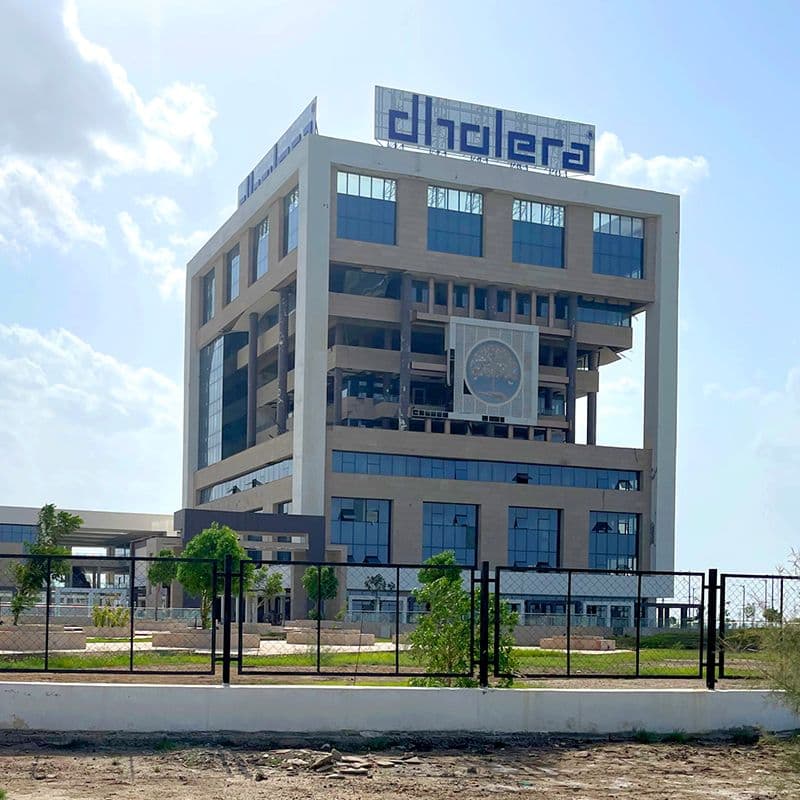
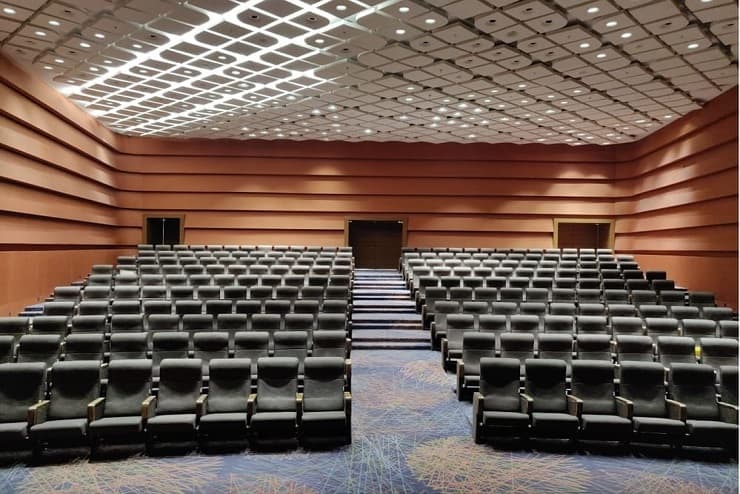
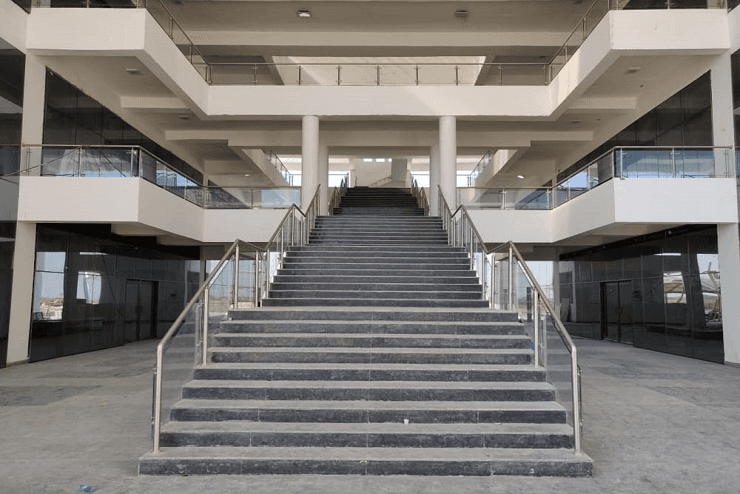
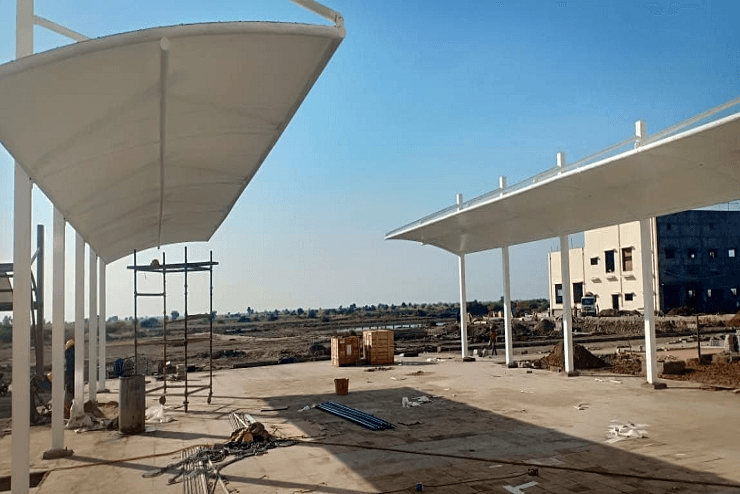
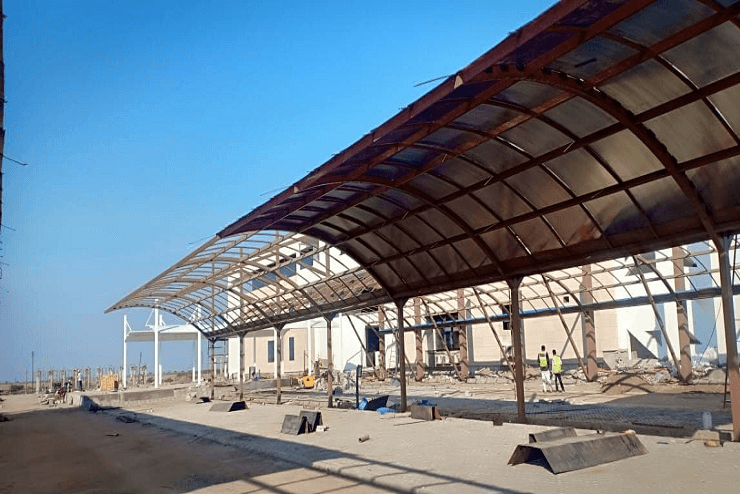
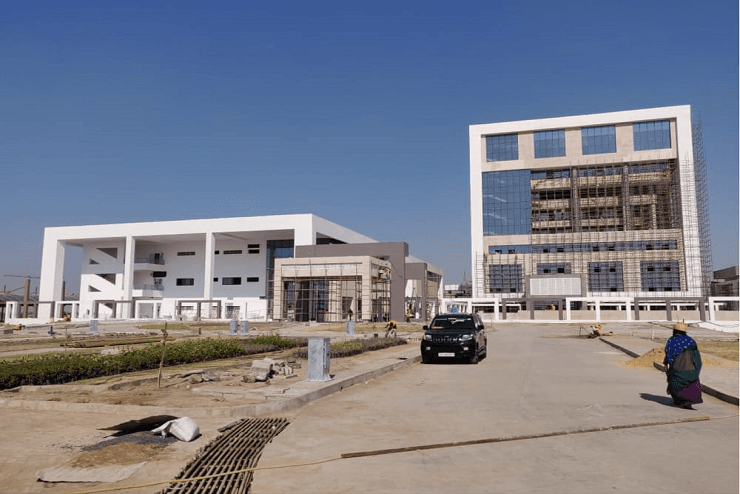
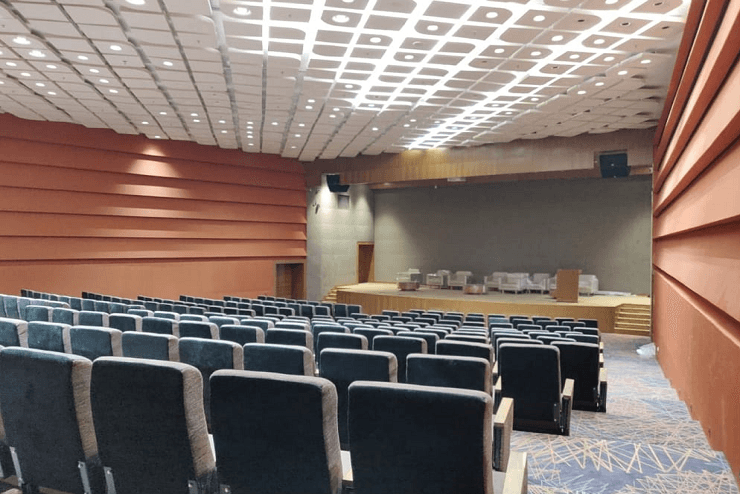
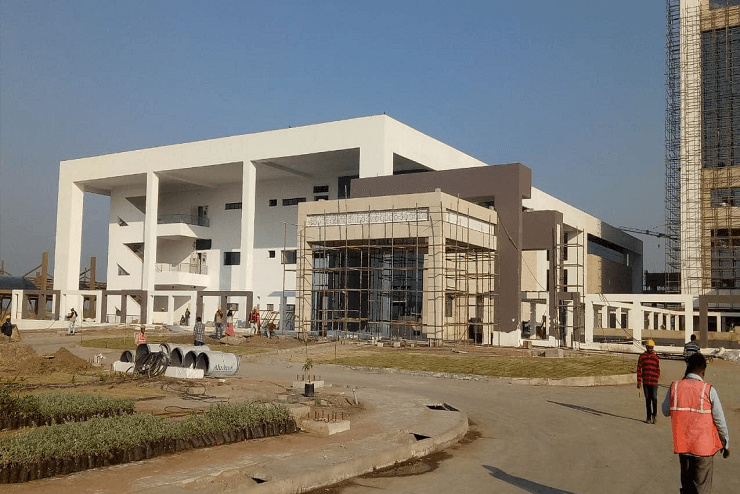
ABCD Building is the Administration and Business Center of Dholera SIR. It serves as the central administrative office of Dholera Smart City.
All legal processes and government approvals are handled through a single-window clearance system within the building. This helps simplify administrative procedures for businesses and investors.
The ABCD Building also houses the central command center for ICT and SCADA systems. It monitors and controls the city's smart infrastructure and essential services.
The building is located in TP2 West (Phase 1) within the Knowledge and IT Zone.
Constructed by Cube Construction Engineering Ltd., the ABCD Building has become one of the most recognized landmarks in Dholera Smart City.
Today, it is a major attraction for investors visiting Dholera SIR and reflects the city's modern infrastructure and planned development.
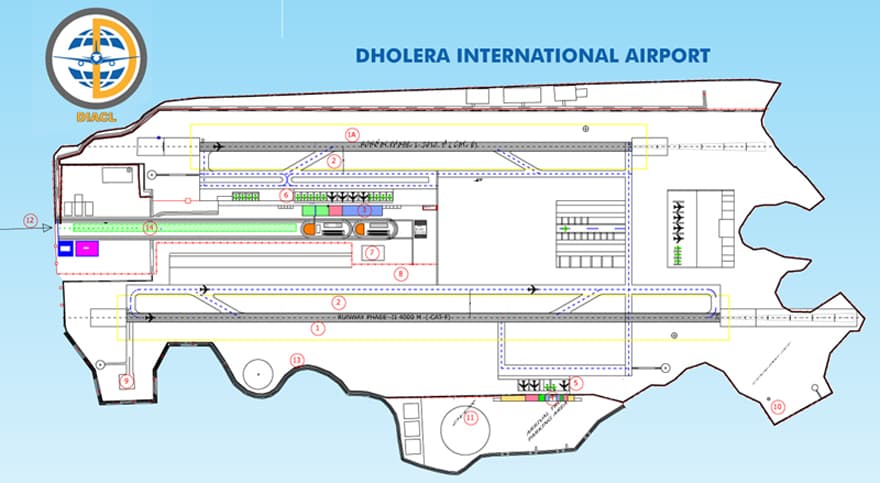
The Dholera International Airport is planned in the northern part of Dholera SIR.
It is designed to serve Dholera SIR, nearby regions, and future passenger and cargo demand.
The airport will also help reduce traffic congestion at Ahmedabad's existing international airport.
Around 1,426 hectares of land have been identified for airport development.
Two runways are planned to accommodate large aircraft, including the Airbus A380.
Ahmedabad Airport has experienced rapid traffic growth over the years. Due to limited space, expanding the existing airport is challenging.
A new Greenfield International Airport at Dholera is planned to meet future passenger and cargo requirements.
The Government of Gujarat identified the need for a Greenfield International Airport to support the long-term growth of Dholera SIR.
The airport will strengthen industrial development, business travel, cargo movement, and foreign investment in the region.
It has been included among the state's "Early Bird Projects" in consultation with the Department for Promotion of Industry and Internal Trade (DPIIT).
The Government of Gujarat has also signed an MoU with the Delhi Mumbai Industrial Corridor Development Company to support the project.
1,426 hectares of land have been selected at Navagam, Dholera, Ahmedabad district for the airport.
The Airports Authority of India (AAI) has prepared the feasibility report.
The Ministry of Defence has issued a No Objection Certificate (NOC) for the airport.
The Ministry of Civil Aviation has granted site clearance approval.
AAI has completed the Detailed Project Report (DPR) and Environmental Impact Assessment (EIA) study.
The airport is planned with two runways measuring 2,900 m and 4,000 m.
DIACL has applied for in-principle approval from the Ministry of Civil Aviation.
Delhi Mumbai Industrial Corridor Corporation Ltd. has been offered equity in DIACL.
The project site has been measured and demarcated by the District Inspector of Land Records.
Boundary stone markers have been installed at 182 peripheral points.
Japan International Cooperation Agency (JICA) is preparing the Detailed Project Survey (DPS).
The airport will be developed under the PPP model following the Greenfield Airport Policy of the Government of India.
The airport is planned on the northern side of Dholera SIR, about 1 km away.
The Government of Gujarat has reserved 9,200 hectares of land for the project.
The Detailed Project Report (DPR) is under preparation by AAI.
The Airports Authority of India has confirmed the site's suitability.
A Special Purpose Vehicle (SPV) worth ₹100 crore has been formed by the Government of Gujarat.
The airport will provide both passenger and cargo services.
The project has received principal approval from the Government of India.

The Dholera Solar Power Plant is one of India's largest renewable energy projects. It supports the vision of developing Dholera Smart City as a sustainable and future-ready destination.
The project faces challenges such as high soil salinity, corrosive coastal air, and the need for regular solar panel maintenance.
Despite these challenges, the long-term environmental and economic benefits make the project highly valuable.
Dholera offers large areas of government-owned barren land, making it an ideal location for a large-scale solar park.
Since electricity generation and consumption are planned within the same region, transmission losses and costs can be reduced.
Dholera Solar Power Plant is also expected to attract construction companies, manufacturing industries, and engineering businesses.
These developments will create thousands of employment opportunities for people in Dholera and nearby regions.
The project aims to promote clean energy, protect natural resources, and reduce carbon emissions.
Its long-term goal is to provide a cleaner environment and improve the quality of life for future residents of Dholera Smart City.
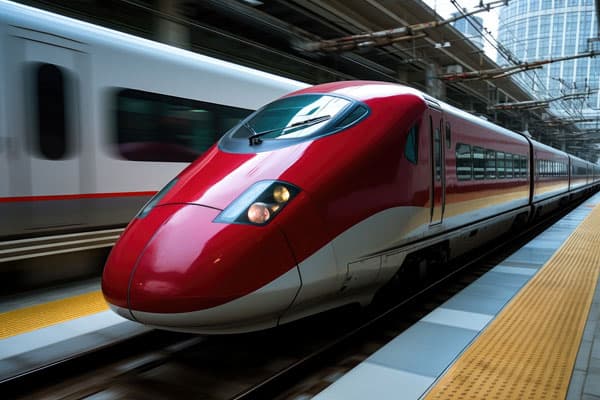
A High Speed Metro and rail network has been proposed to connect Ahmedabad, Gandhinagar, and Dholera Smart City.
The project is part of the Delhi Mumbai Industrial Corridor (DMIC) master plan and has received approval from the Central Government.
The metro network will improve regional connectivity across Gujarat and provide faster travel between major cities.
It will connect urban centers, railway stations, bus terminals, and the Dholera International Airport.
Better connectivity to the airport is expected to support the growth of Dholera Smart City and encourage business, tourism, and investment.
The project will be completed in two phases.
Phase 1 will connect Ahmedabad with Gandhinagar over a distance of approximately 61.55 km.
Phase 2 will extend the network from Gandhinagar to Dholera via GIFT City, covering about 38.45 km.
| Phase 1 | APMC/Vasna – Akshardham (Gandhinagar) via Ashram Road – Motera – Koba Circle | 32.65 Kms |
| Ahmedabad Junction – Thaltej via Delhi Darwaja | 10.9 Kms | |
| Phase 2 | Koba Circle – GIFT City – Gandhinagar | 10 Kms |
| Koba Circle – Airport | 8 Kms |
The metro project will be managed by a Government of Gujarat-owned Special Purpose Vehicle (SPV).
The SPV will oversee land acquisition for metro corridors, stations, and related infrastructure.
It will also coordinate the relocation of public utilities in phases to ensure smooth project execution.
The SPV was established with an initial paid-up capital of ₹10 crore and an authorized capital of ₹200 crore.
It will work with both the State Government and the Central Government to finalize project funding.
The Dholera Metro project is expected to carry around 80,000 passengers per hour, with 40,000 passengers traveling in each direction.
By 2031, the metro network is projected to serve approximately 1.7 million commuters.
The Ahmedabad–Dholera Expressway is a major infrastructure project planned to improve connectivity with Dholera Smart City.
The expressway is designed as a six-lane dual carriageway with provisions for future expansion up to ten lanes.
During the initial phase, it will operate as a four-lane highway with two lanes in each direction.
The project is part of the Delhi Mumbai Industrial Corridor (DMIC) master plan and has received approval from the Central Government.
Dholera SIR will be developed through six town planning schemes across three phases based on future economic activity.
The final phase of development is expected to be completed by 2040.
Once fully developed, Dholera is expected to accommodate nearly two million residents and generate more than eight lakh employment opportunities.
The city is being developed as a global hub for manufacturing, trade, and industrial growth.
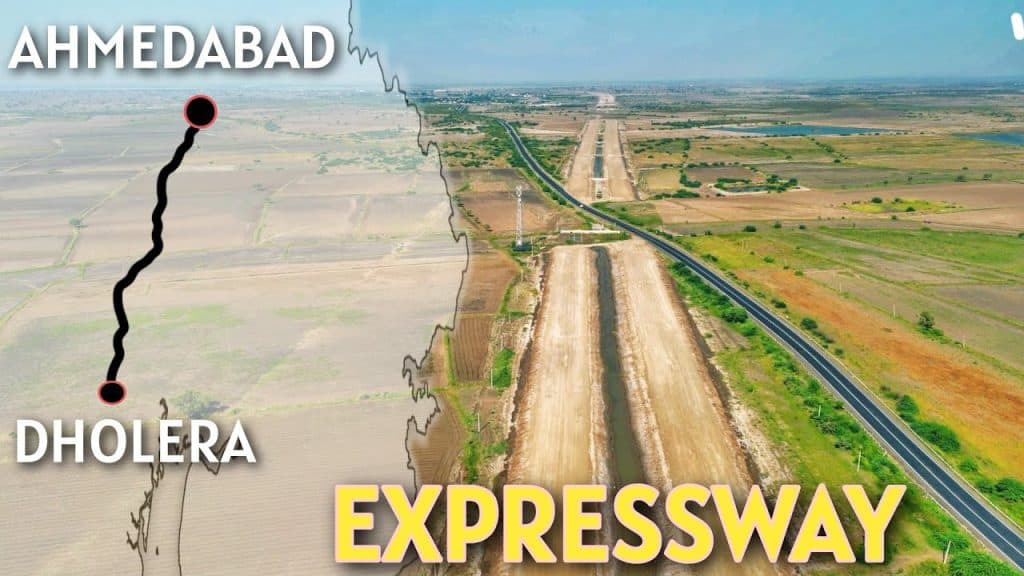
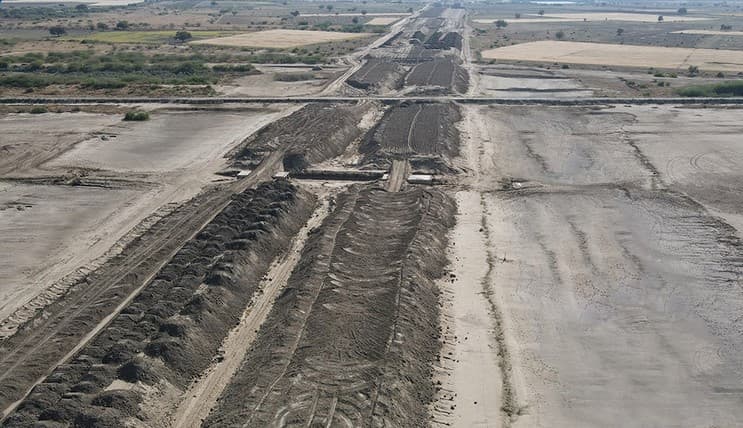
The Ahmedabad–Dholera Expressway is a Greenfield highway project with an estimated investment of ₹3,500 crore.
It is designed to reduce travel time between Ahmedabad and Dholera by approximately one hour.
The highway will initially have four lanes and will be expanded to eight or twelve lanes where future traffic demand requires it.
The route begins near the Sardar Patel Ring Road at Sarkhej, Ahmedabad, and extends to Adhelai in Bhavnagar district.
| Economic IRR | 31.60% |
| Project IRR | 12.00% |
| Equity IRR | 12.32% |
The Kalpasar Project aims to create one of the world's largest freshwater reservoirs in the Gulf of Khambhat, Gujarat.
The project includes the construction of a 30 km dam across the gulf. It is designed to store surplus water from major rivers, including the Sabarmati, Mahi, Dhadar, Narmada, and several rivers flowing through the Saurashtra region.
The dam will also improve regional connectivity. A proposed 10-lane road across the dam will reduce travel time between Saurashtra and South Gujarat while supporting economic development.
The project also focuses on fisheries development. It includes plans for two major carp hatcheries to strengthen both freshwater and saltwater fish production and support local fishing communities.
In addition, the Kalpasar Project is expected to improve irrigation, provide water for industries, and support long-term agricultural and economic growth across Gujarat.
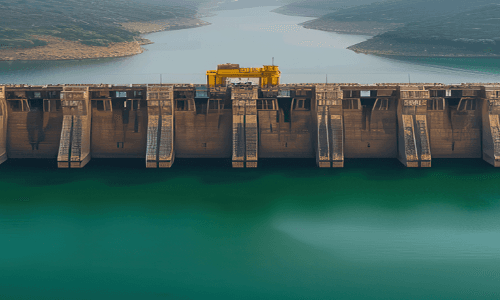
After the Gulf is enclosed, water levels inside the reservoir can be controlled while natural tidal movement continues outside the dam.
This design allows the project to generate tidal energy while also storing freshwater for future use.
Beyond water storage, the Kalpasar Project also supports land reclamation, transportation improvements, irrigation, and fisheries development.
The reservoir will capture surplus river water, creating a reliable freshwater source for agriculture, industries, and nearby communities.